

🌐 What is the Internet of Things (IoT)
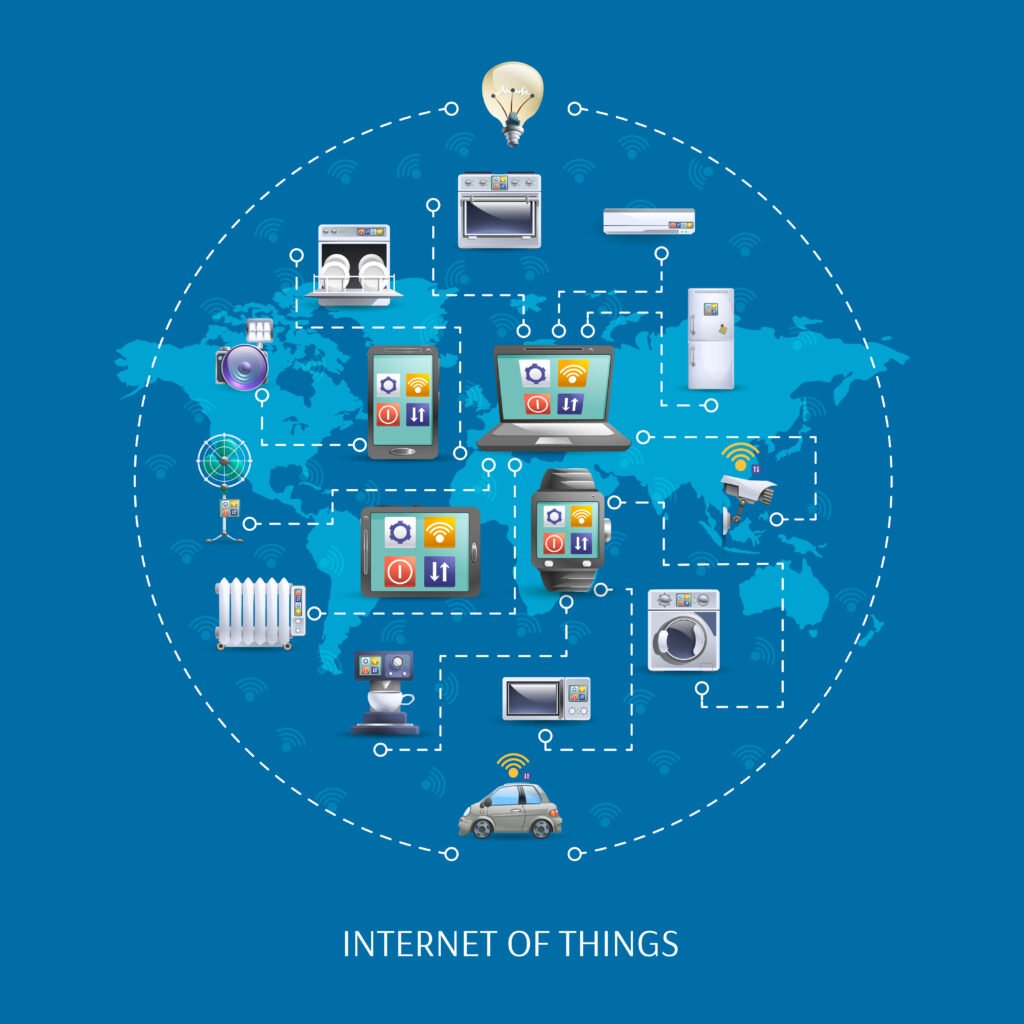
The Internet of Things (IoT) refers to a network of physical objects (“things”) embedded with sensors, software, and other technologies that connect and exchange data with other devices and systems over the internet.
Examples of IoT devices:
Smart TVs, fridges, and thermostats
Wearables like smartwatches
Smart home devices (Alexa, Google Home)
Industrial machines with sensors
Connected vehicles
🧠 Core Concepts of IoT
1. Things/Devices
These are the physical objects that collect data. Each has a unique identity (IP address) and is capable of communication.
2. Sensors and Actuators
Sensors: Collect data (temperature, motion, light)
Actuators: Perform actions (e.g., turn on lights, adjust thermostats)
3. Connectivity
Devices use communication protocols like:
Wi-Fi
Bluetooth
Zigbee
Cellular (3G/4G/5G)
LPWAN (e.g., LoRa, NB-IoT)
4. Data Processing
The collected data is processed either on the device (edge computing) or in the cloud.
5. User Interface
The user interacts with IoT systems via apps, dashboards, or voice commands.
🔄 How IoT Works – Step by Step
Device/Sensor collects data
Data is transmitted to the cloud/server
Cloud processes the data
Decision/action is made (manually or automatically)
Feedback is sent back to the device or user
🏠 Types of IoT Applications
1. Consumer IoT
Smart homes (thermostats, lighting)
Wearables (Fitbit, Apple Watch)
Smart appliances (refrigerators, ovens)
2. Industrial IoT (IIoT)
Factory automation
Predictive maintenance
Remote monitoring of machines
3. Healthcare IoT
Remote patient monitoring
Smart health trackers
Medical device integration
4. Agricultural IoT
Soil moisture sensors
Weather forecasting tools
Crop monitoring drones
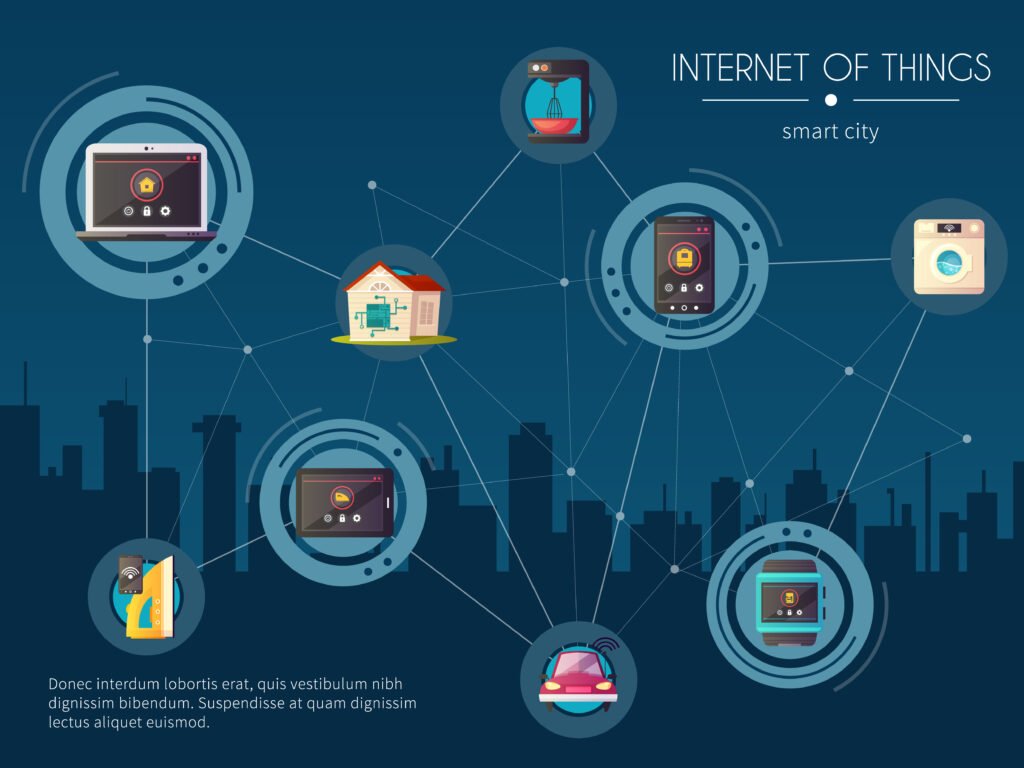
5. Smart Cities
Traffic management
Waste management
Smart lighting and utilities
🔒 IoT Security Concerns
Data privacy
Unauthorized access
Device hacking
Firmware vulnerabilities
Security measures:
Strong encryption
Regular firmware updates
Device authentication
Network segmentation
✅ Benefits of IoT
Increased automation and efficiency
Better decision-making through real-time data
Cost savings and energy optimization
Enhanced user convenience and comfort
Predictive maintenance reduces downtime
❌ Challenges of IoT
Security and privacy risks
Interoperability issues (devices from different vendors)
Managing large-scale networks
High implementation costs
Data overload and management
📈 Future of IoT
Over 75 billion connected devices expected by 2030
AI-powered automation will grow
Expansion into smart cities, precision agriculture, and autonomous vehicles
Enhanced edge computing and IoT cybersecurity